
Why Cheerleaders Get Wrist Pain (And How To Fix It)
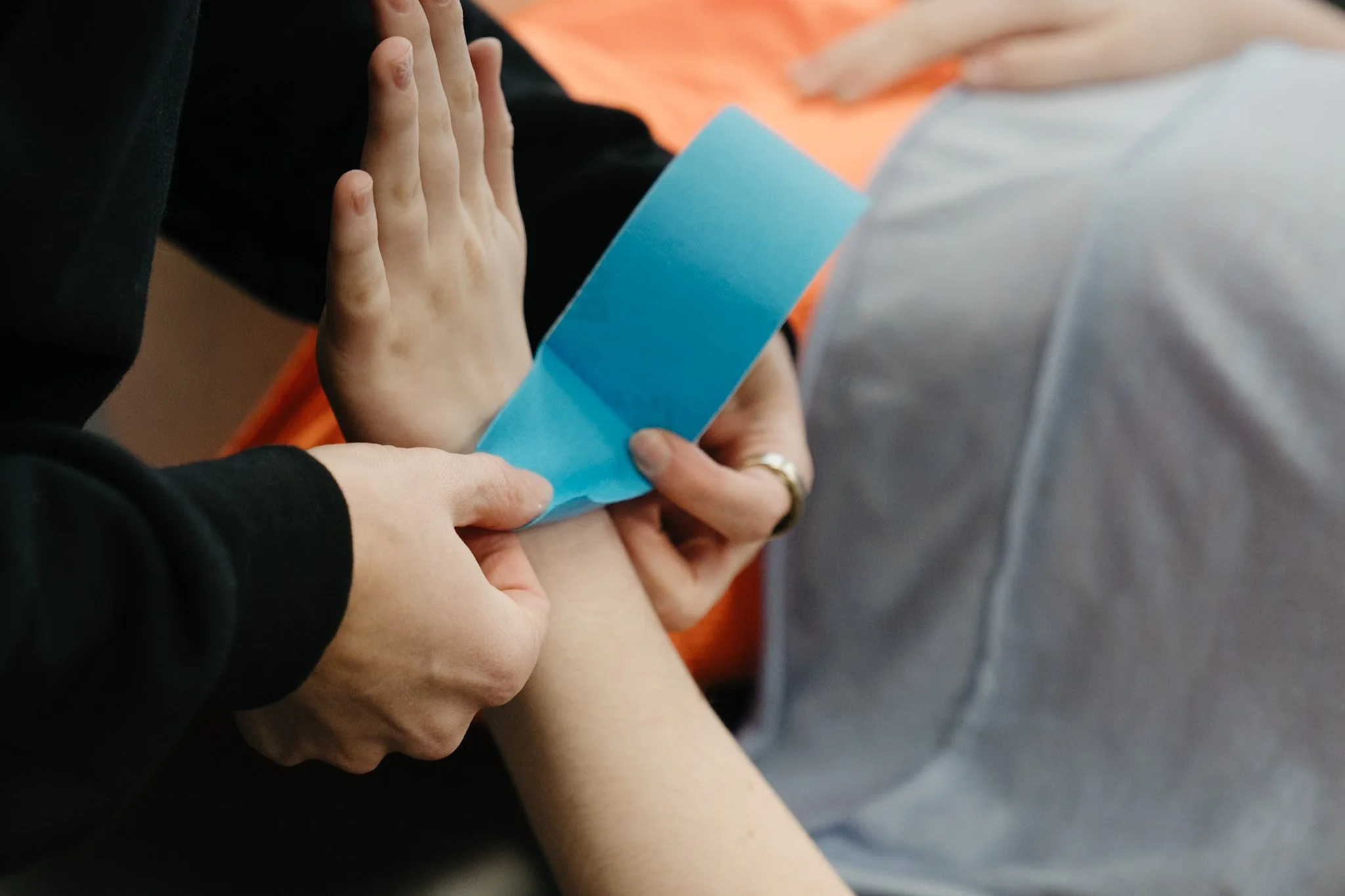
It has been found that nearly 1 in 5 (20%) of cheerleaders will deal with wrist pain or injury at some point in their careers. That is a high number—and something I personally dealt with for years when I was cheering.
It makes sense. Our wrists are small joints that are asked to absorb big forces and function as weight-bearing joints, even though they weren’t necessarily designed to do that.
Even so, that does not mean wrist pain is something you need to live with as a cheerleader. And taping your wrists for every private, practice, and competition is not the answer either. There are many things you can do to prevent injury and support your wrists for a long, healthy cheer career.
Why Is Cheerleading So Hard on The Wrists?
Tumbling & Stunting turn wrists into weight-bearing joints(And they aren’t necessarily designed for that)
Our wrists are made up of eight small carpal bones and several joints. Compared to other joints in the body, the wrist is relatively small. Unlike the lower extremities (knees and ankles), the wrists were not designed to consistently bear body weight.
In tumbling and stunting, the wrist is repeatedly forced into deep extension (bending backward) while absorbing forces greater than body weight (anywhere from 2–20x). That is a lot to ask of a small joint.
As Skills ADvance, So Does the loadAs athletes progress in tumbling—connecting multiple skills, moving to harder surfaces (like dead mat), and increasing speed—the load on the wrists increases significantly. The same applies to stunting as skills become more advanced.
Cheerleading is one of the only sports that places full body weight and dynamic movement through the wrists repeatedly… not ideal.
Dysfunction Up the kinetic chain (elbow, shoulder, & upper back)Often, the wrist is the victim—not the culprit.
Because the wrist is small and vulnerable, it ends up absorbing force that should be distributed elsewhere. If a cheerleader lacks thoracic (upper back) mobility or shoulder mobility, they may not be able to fully extend their arms overhead during tumbling or stunting.
When that happens, the body compensates—and the wrist takes on excess stress.
Cheerleaders are often prone to hypermobilityFlexibility is a huge advantage in cheerleading—but it can come at a cost.
Many cheerleaders are naturally hypermobile, meaning their joints move more easily and often beyond normal ranges. While this can look great in skills, it also means less natural joint stability—especially in the wrists.
Because of this, cheerleaders need exceptional strength and control to support their joints and prevent pain.
Younger Athletes Are At An Even Higher RiskIn younger athletes, growth plates in the wrist are still open (typically until ages 14–16 in girls and 16–19 in boys). This makes the wrist more vulnerable to injury, especially with high training volume.
Growth plate injuries in the wrist are common—but often overlooked in cheerleaders.
Common Types of Wrist Pain in Cheerleaders
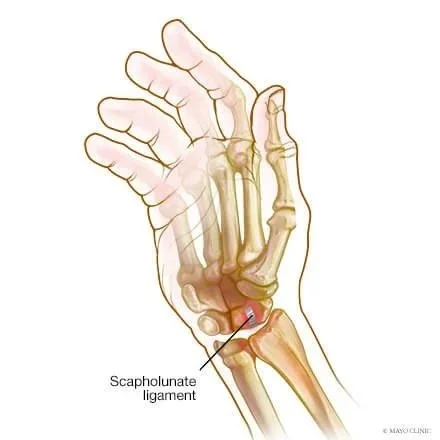
wrist SprainA wrist sprain occurs when one of many interosseous ligaments that support the bones in the wrist tear, are overused or stretched beyond their limits. Outside of cheerleading, these injuries usually occur when someone falls on an outstretched arm and the wrist is forcefully bent or twisted. While that can happen in cheer, overuse and constant repetition can cause the same injury.
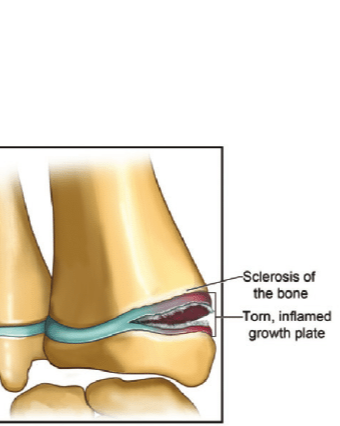
Stress Fracture (“Gymnast Wrist”)Gymnast wrist, also known as Distal Radial Epiphysitis, is a stress fracture to the growth plate of the radius (thumb side of the wrist). It is an extremely common overuse injury seen in cheerleaders. Athletes are especially vulnerable if they are going through a growth spurt and around the ages of 10-12. This pain is usually worse with weight-bearing activities like tumbling.
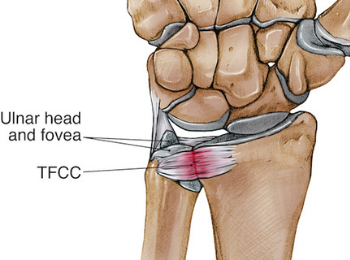
Triangular Fibrocartilage Complex Tear (TFCC)TFCC injuries involve damage to the triangular fibrocartilage complex, a cartilage structure located on the ulnar (pinky) side of the wrist. This injury happens to cheerleaders of all ages and the pain is usually the worst with gripping or rotational movements.
Signs Wrist Pain Is Becoming a Bigger Problem
Things parents, coaches, and cheerleaders should watch for:
Pain with basic skills such as handstands and bridges
Swelling around the wrist
Any discoloration or numbness and tingling in the hand and fingers
Pain lasts well after practice and keeps coming back
Avoiding tumbling due to discomfort
What Actually Helps Wrist Pain in Cheerleaders
Proper Thoracic & Shoulder Mobility One of the biggest impairments I see in cheerleaders is stiffness in the upper thoracic spine and limited shoulder mobility.
Our bodies are great at compensating—and that compensation often shows up in the wrists. If athletes cannot fully reach their arms overhead, the elbows collapse and the wrists are forced into excessive extension.
Over time, this creates irritation and pain.
Ways to improve mobility:
Strong & Stable ShouldersMobility alone isn’t enough—cheerleaders also need strong, stable shoulders.
Strengthening the rotator cuff, traps, rhomboids, and lats helps distribute force properly and prevents overload from shifting down to the wrists.
Ways to improve shoulder strength:
adequate wrist mobilityTo safely bear weight through the wrists, athletes need about 90 degrees of pain-free wrist extension. If that range isn’t there, it is imperative that you stretch and mobilize your wrists until you’ve reached that level.
Ways to improve wrist mobility:
Improving grip strengthGrip strength is closely tied to wrist strength and stability.
Improving grip strength has been shown to help reduce pain and improve function in athletes with wrist issues.
Ways to improve grip strength:
Gradual load progression with proper techniqueLike any injury in cheerleading, progression matters.
Athletes should build tolerance, strength, and control before increasing difficulty or volume. Proper tumbling mechanics—especially blocking and shoulder positioning—can significantly reduce stress on the wrists.
Recovery & Tissue CareWhen appropriate, targeted recovery methods can help manage symptoms and support healing:
Soft tissue work
Dry needling
Cupping
Temporary taping or bracing
wrist pain is not normal
〰️
wrist pain is not normal 〰️
What’s Next?
Ready to Stop Pushing Through wrist Pain?If you or your cheerleader are dealing with wrist pain from tumbling or stunting, the earlier you address it the easier it is to fix.
I work with cheerleaders to:
Identify the root cause of wrist pain
Build wrist, shoulder, and core strength
Modify training without pulling athletes out of cheer
Prevent injuries from coming back.
👉 Schedule a discovery call to work with me
Looking to Prevent Wrist Pain Before It Starts?Maybe you or your athlete isn’t injured—but wants to prevent wrist pain or injury in the future. My position-specific cheerleading strength classes are the perfect addition to cheer training.
These classes are designed to train you like the elite athlete you are and include:
Strength training tailored to flyers and bases/backspots
Focus on core stability, hip strength, and controlled power
Built-in recovery and mobility every class
A program that supports cheer practice—not competes with it
👉 Click here to learn more about cheer strength classes
Stay ConnectedFor ongoing cheer-specific strength tips, injury prevention education, and training guidance:
👉 Follow me on Instagram @westandwellpt
👉 Subscribe to my newsletter for weekly insights to help cheerleaders stay healthy, strong, confident, and pain-free
Resources
Chawla A, Wiesler ER. Nonspecific wrist pain in gymnasts and cheerleaders. Clin Sports Med. 2015 Jan;34(1):143-9. doi: 10.1016/j.csm.2014.09.007. Epub 2014 Nov 25. PMID: 25455401.
Hong SJ, Lee MY, Lee BH. Effects of Wrist Stability Training Combined with Grip Strength Exercise on Pain and Function in Patients with Nonspecific Chronic Wrist Pain. Medicina (Kaunas). 2024 Jul 16;60(7):1144. doi: 10.3390/medicina60071144. PMID: 39064574; PMCID: PMC11278657.
Jones, A. et al. (2018). Triangular fibrocartilage complex injuries: current concepts in classification, diagnosis and management. Journal of Hand Surgery (European Volume), 43(8), 849-858.
Smith, J. (2017). Gymnast wrist: a clinical and biomechanical review. Journal of Sports Medicine and Physical Fitness, 57(1-2), 106-115.
Disclaimer: The views expressed in this article are based on the opinion of the author, unless otherwise noted, and should not be taken as personal medical advice. The information provided is intended to help readers make their own informed health and wellness decisions.